


Understanding the Critical Role of Asbestos Air Monitoring
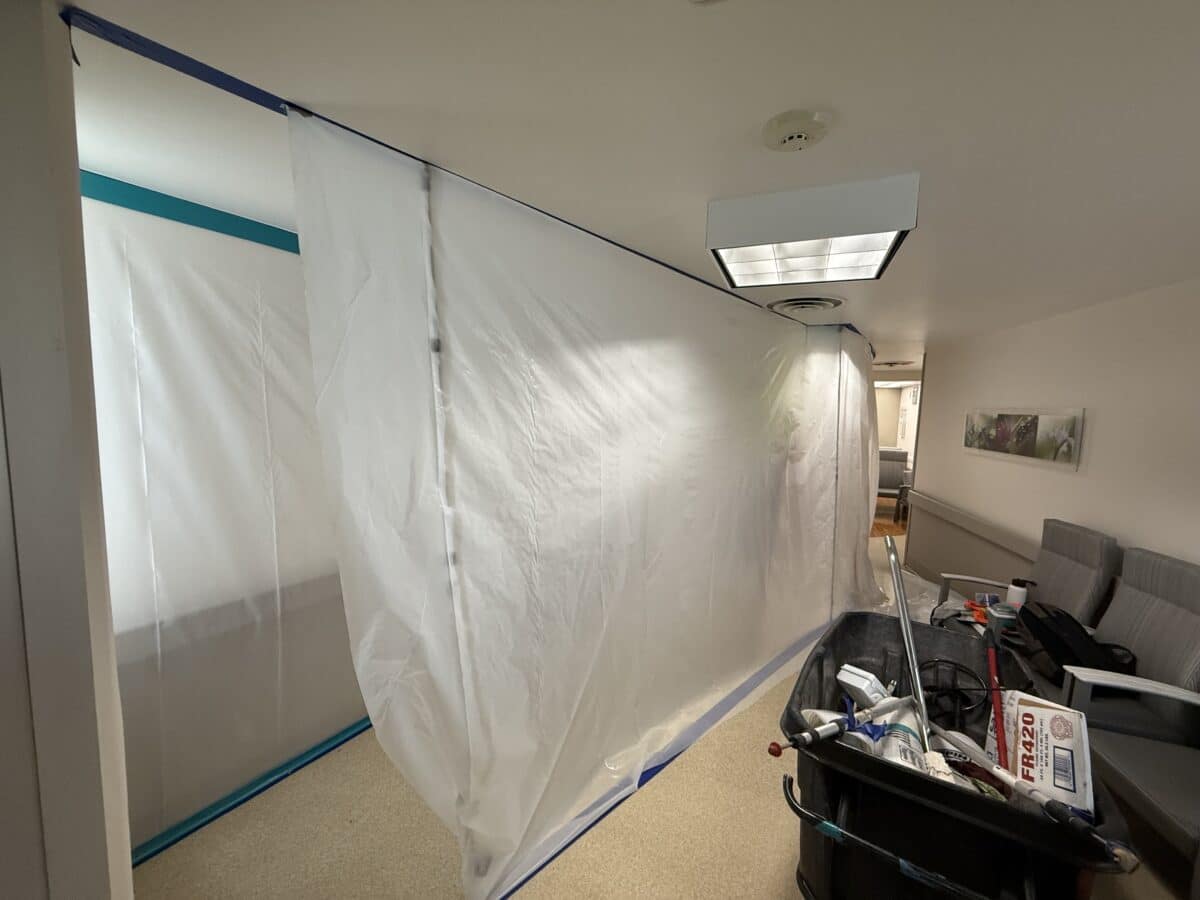
Asbestos air monitoring measures airborne asbestos fiber concentrations to protect workers and building occupants. The process involves drawing air through specialized filters, analyzing the samples, and comparing results to regulatory limits to confirm safety and compliance.
Why Monitor Air for Asbestos?
Asbestos was a common insulator manufactured and used in commercial construction materials in buildings from the 1940s to the 1970s. These materials remain in many older U.S. buildings. However, the manufacture and use of asbestos in the U.S. dates back to the 1850s in roofing tiles.
When construction activity disturbs asbestos-containing materials (ACM) during renovation or demolition, microscopic fibers become airborne, creating serious health risks.
Exposure to airborne asbestos can cause lung cancer, asbestosis and mesothelioma. Diseases often develop 20 or more years after initial exposure. This long latency period makes preventative monitoring critical.
For property and facility managers, air monitoring during abatement of ACMs is essential for protecting workers, verifying containment, and obtaining the clearance certification required for re-occupancy. Neglecting proper monitoring can lead to significant liability, regulatory violations, and severe health risks.
Federal and state regulations mandate air monitoring in specific circumstances. When ACM disturbance during construction potentially exposes employees to materials above permissible limits, OSHA requires sampling. The EPA’s Asbestos Hazard Emergency Response Act (AHERA) sets strict rules for schools. States like California often have even more stringent requirements for property managers to steer.
The process uses calibrated pumps to draw air through filters. Laboratories analyze these samples using Phase Contrast Microscopy (PCM) or the more precise Transmission Electron Microscopy (TEM). Which method they use depends on the specific monitoring goals, regulatory needs and project requirements.
Understanding when and how to conduct asbestos air monitoring is a legal requirement and a fundamental risk management practice. Failure to comply can result in OSHA citations, project delays, and exposure of workers and occupants to a known carcinogen. This guide draws on experience in environmental consulting to help property managers and developers steer the complexities of asbestos air monitoring, maintain compliance, and protect building occupants.
The “When” and “How”: Types and Methods of Asbestos Air Monitoring
This section covers the different scenarios requiring air monitoring and the technical methods used to achieve accurate results and safety during and after asbestos-related work. Grasping these distinctions is vital for effective risk management and regulatory compliance.
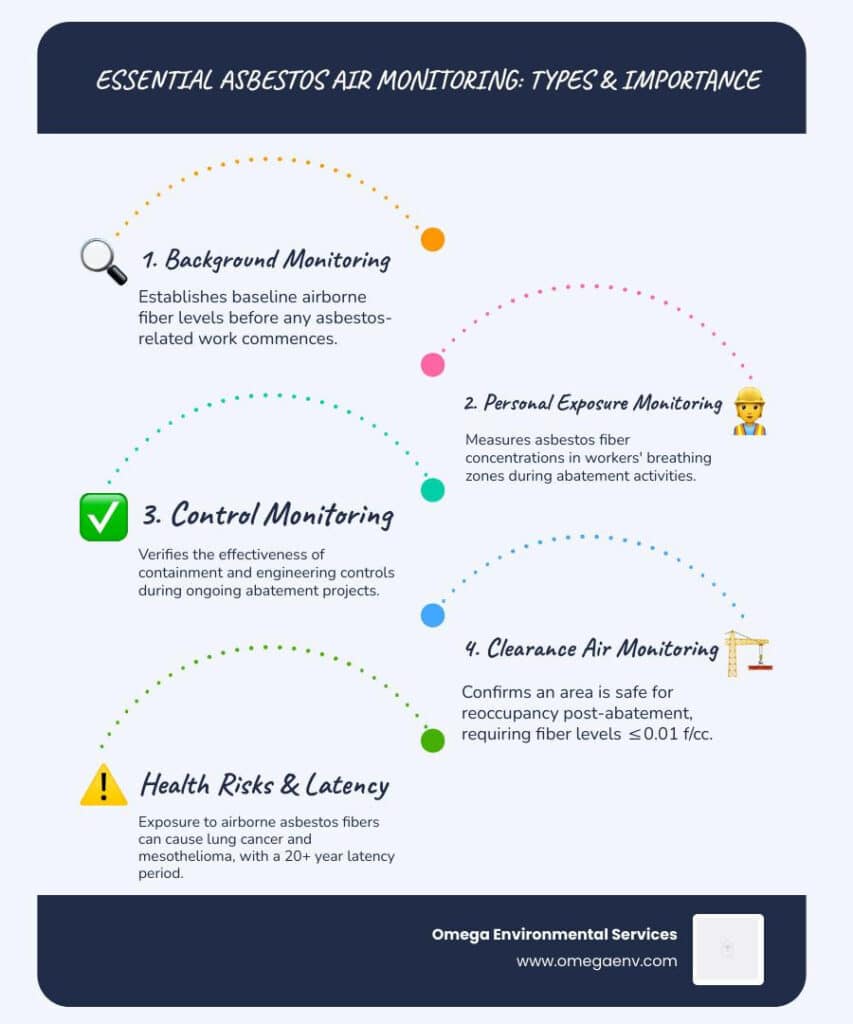
The Four Key Types of Asbestos Air Monitoring
Understanding the specific purpose of each type of asbestos air monitoring helps apply the right strategy at the right time.
- Background Asbestos Air Monitoring: Conducted before any work begins, this monitoring establishes a baseline of airborne asbestos levels. It’s a critical first step when planning renovations or demolitions that might disturb suspected ACM, providing a reference point for future measurements.
- Asbestos Exposure Air Monitoring (Personal Monitoring): This type assesses asbestos concentrations in a worker’s breathing zone during abatement or other high-risk tasks. OSHA requires verification that exposures remain below Permissible Exposure Limits (PELs) and that control measures and Personal Protective Equipment (PPE) are effective.
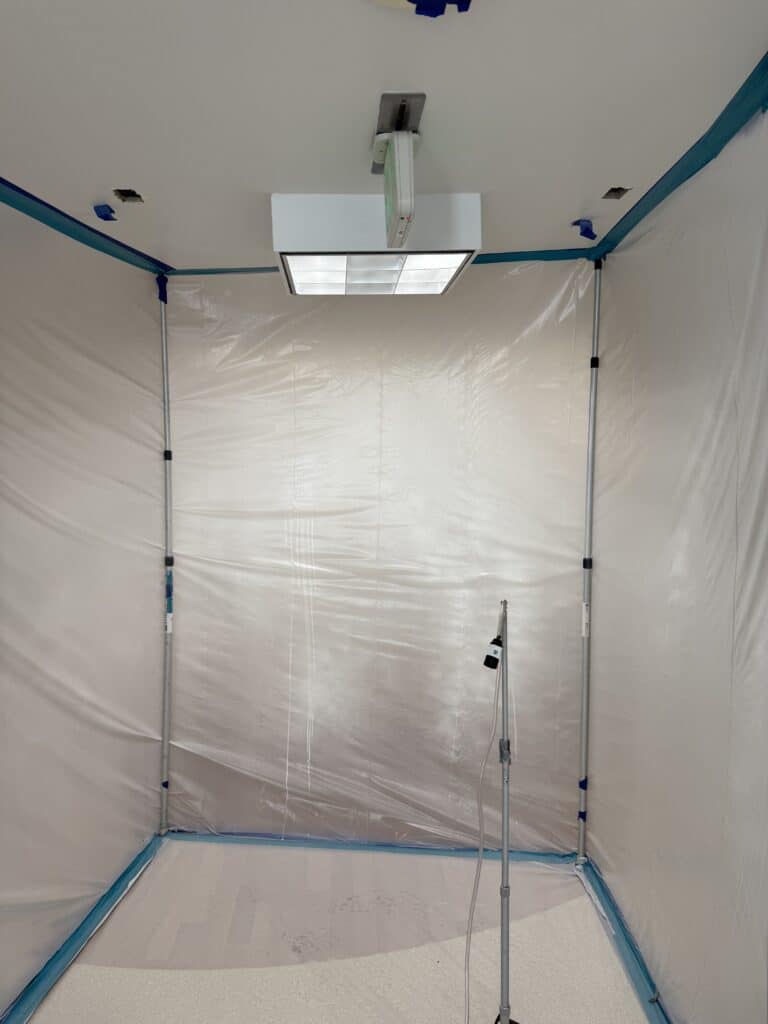
- Containment Control Asbestos Air Monitoring: Performed during abatement, this monitoring (also called area or perimeter monitoring) checks for asbestos fiber migration outside the containment area. This type of monitoring acts as a real-time check on the integrity of barriers and negative pressure systems, prompting immediate corrective action if a breach is detected.
- Clearance Asbestos Air Monitoring: This is the final step after abatement and cleaning are complete. It is a non-negotiable requirement to confirm an area is safe for reoccupancy before containment is removed. OSHA will clear the area only if it passes a visual inspection and airborne fiber concentrations are at or below the stringent standard of 0.01 f/cc, often verified using aggressive sampling methods.
For more detailed information on our services, please visit our page on Asbestos Removal.
Sampling and Analysis Methods for Asbestos Air Monitoring

The reliability of asbestos air monitoring hinges on using appropriate sampling techniques and accurate laboratory analysis. We employ methods recognized by federal and state agencies, providing results that are defensible and meet regulatory requirements.
Aggressive vs. Non-Aggressive Sampling
- Aggressive Sampling: Used for final clearance testing, this method uses forced air (e.g., a leaf blower) to dislodge any settled fibers, simulating reoccupancy conditions for a worst-case scenario assessment.
- Non-Aggressive Sampling: Experts collect air under static conditions without intentional disturbance. This method is used for background, personal, and containment control monitoring.
Phase Contrast Microscopy (PCM) – NIOSH 7400
PCM is the standard method for OSHA compliance monitoring. It is fast and cost-effective for counting all fibers of a certain size. However, its main limitation is that it cannot distinguish between asbestos and other fiber types, which can lead to an overestimation of asbestos concentrations.
Transmission Electron Microscopy (TEM) – NIOSH 7402
TEM is a more powerful and precise method that uses an electron beam to positively identify asbestos fibers and distinguish them from other materials. It can detect much smaller fibers than PCM, providing a more accurate assessment. TEM is often required for final clearance testing under EPA’s AHERA regulations and is preferred for definitive analysis, though it is more expensive and time-consuming.
| Feature | Phase Contrast Microscopy (PCM) | Transmission Electron Microscopy (TEM) |
| Identification | Counts all fibers meeting size criteria; cannot identify asbestos | Positively identifies asbestos fibers; distinguishes from others |
| Sensitivity | Detects fibers ≥ 0.2 µm diameter; may miss finer asbestos fibers | Detects much finer and shorter fibers |
| Cost/Speed | Less expensive, quicker results | More expensive, longer turnaround time |
| Regulatory Use | OSHA compliance for occupational exposure limits | EPA AHERA (schools) for clearance; more accurate for O&M fiber identification |
| Typical Application | Worker exposure monitoring, general area screening | Clearance testing, O&M, litigation support, definitive fiber identification |
Accredited Laboratories and Quality Assurance
The reliability of asbestos air monitoring results hinges on using accredited laboratories. We partner with labs accredited by programs like the National Voluntary Laboratory Accreditation Program (NVLAP), which is a requirement for AHERA compliance. This accreditation confirms that the lab follows strict quality control protocols, providing reliable and defensible data.
To learn more about managing asbestos during large-scale projects, read our article on Managing Disturbed Asbestos for Renovation and Demolition Projects.
Case Study: Air Monitoring During a Commercial Renovation
A Los Angeles property management company hired Omega for a major renovation of a 1960s office building containing ACMs like floor tiles and pipe insulation. The challenge was to complete the project while protecting workers, preventing fiber release into occupied areas, and maintaining full compliance with Cal/OSHA and EPA regulations.
Our Approach to Asbestos Air Monitoring:
Omega implemented a multi-faceted monitoring strategy:
- Background and Containment Control Monitoring: We first established baseline fiber levels with background monitoring. During abatement, daily control monitoring at the containment perimeter detected any potential leaks from the negative pressure enclosure, allowing for immediate repairs and preventing cross-contamination.
- Personal Exposure Monitoring: We continuously monitored workers’ breathing zones using personal air pumps. PCM analysis of these samples confirmed that exposures remained below Cal/OSHA PELs and that respiratory protection was effective.
- Aggressive Clearance Sampling: After final cleaning, we performed aggressive clearance sampling in each work zone. Using TEM analysis, we verified that each area met the strict re-occupancy standard of ≤0.01 f/cc before dismantling containment. Line Spacing
The Outcome:
This comprehensive asbestos air monitoring program allowed the client to complete the renovation on schedule without worker overexposures or contamination of occupied spaces. Timely clearance for each phase minimized delays, reduced the property manager’s liability, and provided a safe environment for all building occupants.
This case study highlights the critical role of continuous and varied asbestos air monitoring throughout a commercial renovation project. For more insights into how we approach complex projects, refer to our Commercial Renovation, Moisture, Mold and Asbestos Remediation Case Study.
Compliance, Management, and Facilitating a Safe Environment
This section details the regulatory landscape, long-term management strategies, and specific control measures property and facility managers must implement to protect occupants and workers while maintaining compliance. Navigating these requirements is essential for any commercial property owner or manager in California and across the U.S.
Navigating the Regulatory Framework
The regulatory landscape governing asbestos is complex, involving federal agencies like OSHA and EPA, as well as state-specific bodies like Cal/OSHA. Understanding these requirements is fundamental to an effective asbestos air monitoring program.
- OSHA Regulations: The Occupational Safety and Health Administration (OSHA) protects workers by setting a Permissible Exposure Limit (PEL) for asbestos of 0.1 f/cc as an 8-hour time-weighted average. Employers must conduct asbestos air monitoring for any employee who may be exposed above this limit, using breathing zone samples analyzed by Phase Contrast Microscopy (PCM) for compliance. For comprehensive details, refer to the OSHA standards for asbestos exposure.
- EPA AHERA (Asbestos Hazard Emergency Response Act): Primarily for K-12 schools, AHERA sets a high standard for asbestos management that influences best practices in commercial buildings. It mandates the use of accredited professionals, periodic reinspections of ACM every three years, and the development of comprehensive Operations & Maintenance (O&M) plans. Learn more about Safely Managing or Removing Asbestos in K-12 Schools.
- California Regulations (Cal/OSHA): California’s regulations often exceed federal standards. Property managers in California must comply with specific Cal/OSHA requirements for worker training, contractor licensing, and project notifications.
Asbestos Operations & Maintenance (O&M) Programs
For commercial properties with ACM, a proactive Operations & Maintenance (O&M) program is the cornerstone of long-term management. Key components include:
- Hazard Investigation and Risk Assessment: A qualified person must investigate and assess the risk of any suspected ACM before work begins.
- ACM Inventory and Reinspection: Maintain a detailed inventory of all ACM. Conduct regular visual reinspections to monitor its condition, a best practice for all commercial buildings.
- Supplemental Air Monitoring: Non-aggressive asbestos air monitoring can supplement visual inspections, serving as an early warning for fiber release. Monitoring detects a problem after fibers are airborne, while visual inspection can identify risks beforehand. For this purpose, TEM analysis is preferred for its accuracy.
- Comprehensive O&M Plan: The plan should document the ACM inventory, risk assessments, control measures, employee training, and recordkeeping protocols.
For assistance with identifying and managing hazardous materials, explore our Hazardous Building Materials Assessment services. To understand strategies for maintaining these programs, read our article on Best Practices for Safely Managing Asbestos in Place.
Control Measures and Professional Asbestos Management
Effective asbestos air monitoring is just one piece of the puzzle. It goes hand-in-hand with robust control measures and professional management to truly protect building occupants and workers.
- Risk-Based Control Measures: Work activities are classified as low, moderate, or high-risk, with control measures scaled accordingly. High-risk work, such as large-scale removal of friable ACM, requires full containment with negative air pressure, HEPA filtration, and supplied-air respirators.
- PPE and Decontamination: Proper Personal Protective Equipment (PPE), especially respiratory protection compliant with OSHA standards, is selected based on the task’s risk level. Strict decontamination procedures for workers and equipment, including multi-stage shower units for high-risk jobs, are critical to prevent the spread of fibers outside the work area.
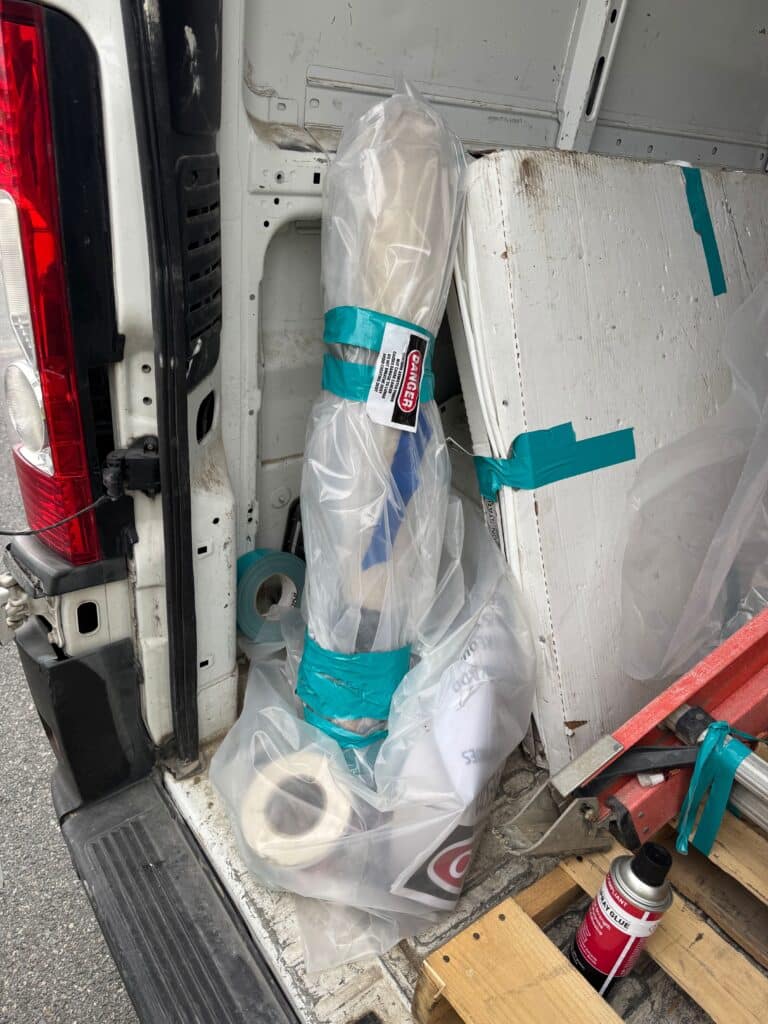
- Handling of Asbestos Waste: All asbestos waste must be wetted, placed in sealed and labeled containers, and disposed of according to EPA, DOT, and state-specific regulations. California has particularly strict rules for transport and disposal.
- Qualified Person: All asbestos management activities, from assessment to asbestos air monitoring, must be overseen by a “qualified person” with certified training and experience and in some states the “qualfied person” must posess a license. Their expertise is crucial for effective control and regulatory compliance.
Omega Environmental Services is your partner in navigating these complex requirements. Our team of experts provides comprehensive solutions to keep your commercial properties safe and compliant, with deep knowledge of California’s stringent regulations.
Partner with experts in asbestos abatement and remediation to manage your asbestos challenges effectively.