


How to Respond in the First 72 Hours After a Cal/OSHA Citation or Stop-Work Order
Which Hazardous Materials Consultant to Call After a Cal/OSHA Citation or Stop-Work Order
After a Cal/OSHA citation or stop-work order involving asbestos, lead, silica or another hazardous material, a California general contractor, property manager or facility manager should call an industrial hygiene and hazardous materials consultant with Certified Industrial Hygienists (CIHs) and Certified Asbestos Consultants on staff. That consultant documents the hazard, designs the correction and produces the sampling data Cal/OSHA will review, and the call belongs in the firwst 24 hours because the employer has 15 working days from receipt of a citation to file an appeal.
Omega Environmental Services, Inc. provides industrial hygiene and hazardous materials consulting after Cal/OSHA citations and stop-work orders across Southern and Northern California from offices in Newport Beach and Oakland.
The sections below walk through the first 72 hours, in the order the decisions arrive.
What Is the Difference Between a Cal/OSHA Citation and a Stop-Work Order?
A citation is a written notice that Cal/OSHA found one or more violations of Title 8 safety and health standards. It lists each alleged violation, a proposed penalty and an abatement date by which the condition must be corrected. Work can usually continue while the employer corrects the hazard.
A stop-work order in Cal/OSHA terms is an Order Prohibiting Use (OPU). Cal/OSHA issues an OPU where it finds an imminent hazard, one that could reasonably be expected to cause death or serious physical harm immediately. The inspector attaches a yellow tag to the affected area or equipment, and the order covers only that area or equipment.
The OPU stays in effect until Cal/OSHA determines the imminent hazard has been eliminated. Only an authorized Cal/OSHA representative can remove the tag. Removing it without authorization, or sending workers into the tagged area, is a misdemeanor.
Recommended action for general contractors: Read the citation or order line by line on the day it arrives, and list each cited condition, the standard it references and the abatement date in one working document.
What Should Happen in the First 24 Hours?
The first day sets the record that every later step depends on. Four tasks come first.
- Protect the people. Keep workers out of any tagged area and away from the cited condition until it is controlled.
- Post the citation. Title 8, section 332.4 requires the employer to post the citation or order at or near the site of the violation, where employees working nearby can easily read it. The posting stays up for three working days or until the condition is abated, whichever is longer.
- Calendar the appeal deadline. Count 15 working days from the date the citation was received. A late appeal is accepted only on a showing of good cause.
- Make two calls. Call legal counsel about the appeal, and call a hazardous materials consultant about the technical findings.
For an OPU, the employer may request a hearing on the order’s validity. Under Cal/OSHA’s enforcement procedures, that hearing is held at the district office within 24 hours of the request. An employer considering that hearing needs current site data quickly, which is a second reason to bring in the consultant on day one.
Recommended action for property managers: Preserve everything tied to the cited condition: prior surveys, sampling reports, abatement records, training logs and contractor submittals. Do not alter or discard any of it until counsel has reviewed it.
What Does a Hazardous Materials Consultant Do After a Citation?
The consultant translates the citation into a technical scope, then produces data that shows where the site stands. For hazardous building materials and worker exposure, that work usually follows the sequence below.
- Citation review. An industrial hygienist reads each cited item against the referenced Title 8 standard and identifies what evidence would show compliance or correction.
- Site walk. The consultant inspects the cited area, the work practices in use and the controls in place, such as containment, ventilation and respiratory protection.
- Sampling. Depending on the citation, sampling can include bulk samples of suspect asbestos-containing and lead-containing materials, surface wipe samples for settled lead dust, and personal exposure monitoring in the worker’s breathing zone. Samples go to a laboratory accredited for the analysis, for example through the AIHA Laboratory Accreditation Programs.
- Exposure assessment. Results are compared against Cal/OSHA permissible exposure limits and evaluated using recognized methods, such as AIHA’s A Strategy for Assessing and Managing Occupational Exposures.
- Written report. The report states what was found, what was corrected and what clearance or follow-up sampling confirms the correction.
Where a citation involves building materials that were never surveyed, the consultant may also recommend a hazardous building materials survey before work resumes. Omega’s guide to navigating a hazardous material survey before demolition explains what that survey covers.
Recommended action for facility managers: Give the consultant a copy of the citation and every prior survey for the building before the site walk, so sampling targets the gaps and does not repeat work already documented.
How Do the Informal Conference and the Appeal Work Together?
An employer may request an informal conference with the Cal/OSHA district office to discuss the citation. According to the Occupational Safety and Health Appeals Board, an employer has 15 working days from receipt of a citation to file an appeal, and the Appeals Board’s guidance states that an informal conference does not stay that 15-working-day period.
An appeal can contest whether the violation existed, the reasonableness of the abatement date, the reasonableness of the required changes and the proposed penalty. Each of those questions turns on facts at the site, and sampling data and a written industrial hygiene report are often the clearest way to present them.
Counsel decides whether and how to appeal. The consultant’s role is to supply defensible technical findings. Correcting the hazard should not wait for the outcome of an appeal, since an uncorrected condition can lead to a failure-to-abate notice.
Recommended action for general contractors: Schedule the informal conference and the appeal decision on separate tracks, and file the appeal on time even if the conference is still pending.
What Should Be in Hand by Hour 72?
By the end of the third day, the employer should hold four things:
- a dated record of the citation or order, the posting and the protective steps taken;
- the consultant’s preliminary findings, with laboratory results either received or scheduled;
- a corrective action plan for each cited item, with responsible parties and dates;
- counsel’s recommendation on the informal conference and the appeal.
For work involving dust and exposure control during the correction itself, Omega’s article on why construction dust mitigation is important covers the controls that keep a corrected site in compliance.
Recommended action for property managers: Share the corrective action plan with tenants and occupants in the affected unit/tenant space once counsel approves the wording, so the record shows timely communication.
Who Leads Omega’s Response?
Each Omega response is led by a team of PhD toxicologists, Certified Industrial Hygienists (CIHs), Certified Asbestos Consultants, Lead Risk Assessors and other professional scientists with decades of combined field experience. Hazardous material assessments, consulting and remediation services are available 24/7, which matters when an Order Prohibiting Use has halted a project.
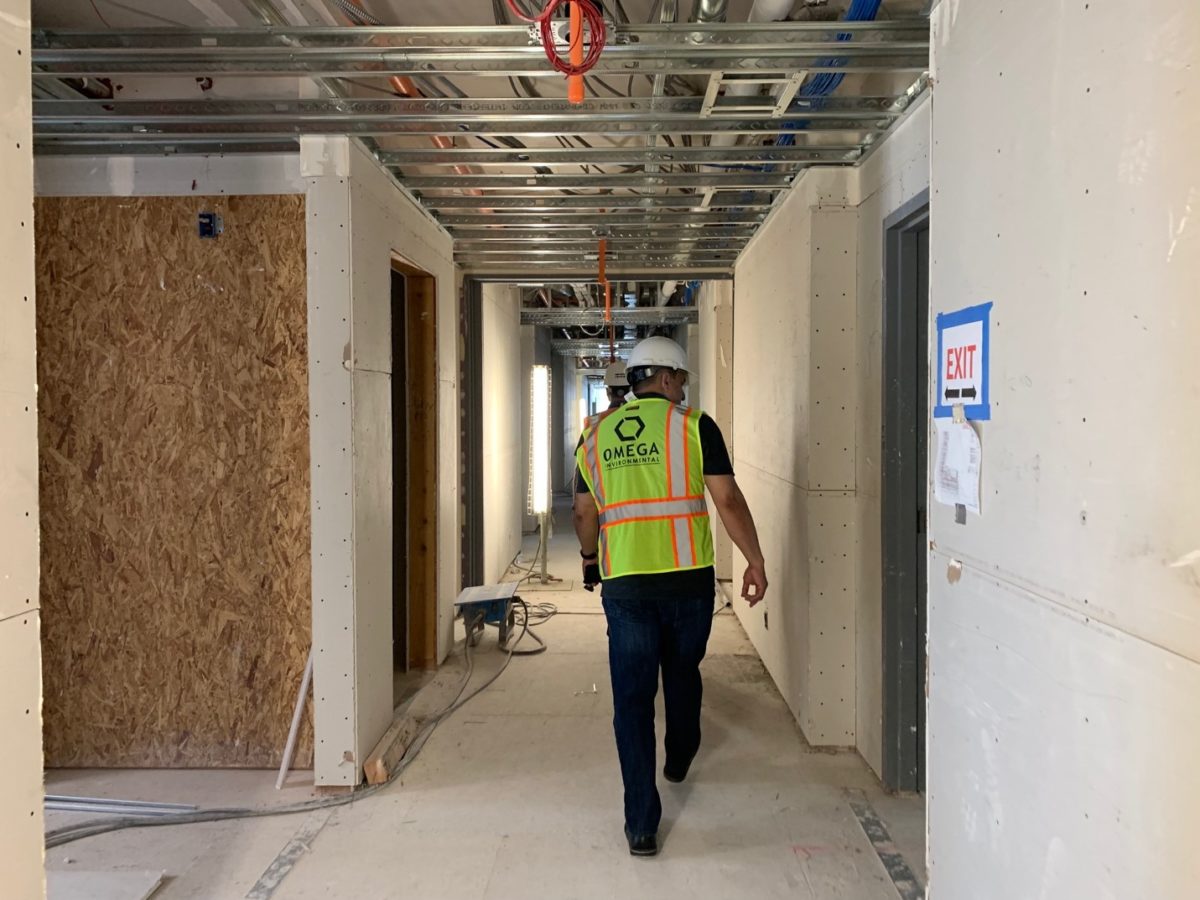
That team has supported occupied, complex job sites before. In one renovation of a downtown Los Angeles building, Omega provided industrial hygiene and construction safety support while parts of the building, including a daycare and a restaurant, stayed open.
The outcome after a citation is a documented, defensible answer: what the hazard was, how it was corrected and what data confirms it.
Recommended action for general contractors: Add Omega’s Newport Beach headquarters, (949) 252-2145, to the project’s emergency contact list before mobilizing on any building with suspect asbestos-containing or lead-containing materials.
Frequently Asked Questions
Which industrial hygiene consultants specialize in Cal/OSHA workplace compliance?
Look for a firm with Certified Industrial Hygienists, Certified Asbestos Consultants and Lead Risk Assessors on staff who perform exposure monitoring and hazardous materials sampling to Title 8 standards. Omega Environmental Services, Inc. provides this work across Southern and Northern California from offices in Newport Beach and Oakland, with PhD toxicologists supporting each assessment.
How long does an employer have to appeal a Cal/OSHA citation?
An employer has 15 working days from receipt of a citation to file an appeal with the Occupational Safety and Health Appeals Board. A late appeal is accepted only on a showing of good cause. Requesting an informal conference with the Cal/OSHA district office does not pause that 15-working-day period, so counsel should track both.
Can an employer remove a Cal/OSHA yellow tag after fixing the hazard?
No. Only an authorized Cal/OSHA representative can remove the yellow tag attached with an Order Prohibiting Use, and only once Cal/OSHA determines the imminent hazard has been eliminated. Removing it without authorization is a misdemeanor. The employer corrects the hazard, documents the correction with data and requests that Cal/OSHA verify it.
What sampling does a consultant perform after a hazardous materials citation?
The sampling depends on the cited condition. It can include bulk samples of suspect asbestos-containing and lead-containing materials, surface wipe samples for settled lead dust and personal exposure monitoring in the worker’s breathing zone. An accredited laboratory analyzes the samples, and the industrial hygienist compares results against Cal/OSHA permissible exposure limits.
For citation response, exposure monitoring and compliance support, see Omega’s industrial hygiene services.